
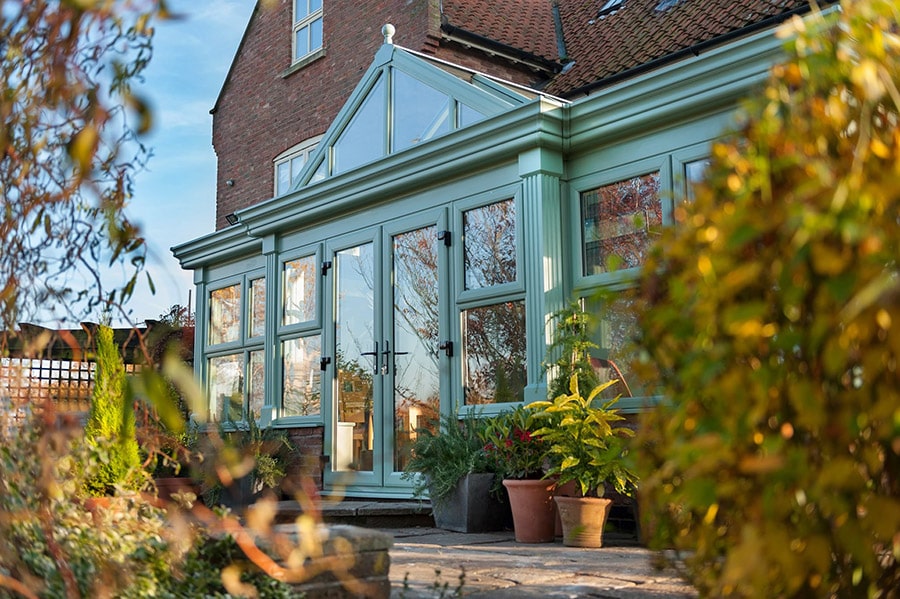
French Doors

Blog, Doors, French Doors

What Are The Main Benefits Of French Doors?

One popular way to enhance your property is the addition of French doors. Here at R&M, people often ask us about the perceived benefits of this type of patio door and whether they’re really worth investing in for a home.

Over the last two or three years, against the background of the pandemic, more of us have been looking to improve our homes. Equally, the amount we’re spending on home renovations has surged by over a third (36%) to a median of £15,000 during the year to October 2021, according to a report by Houzz & Home. This is probably unsurprising given that we all had to spend far more time at home than we would usually during the long months of lockdown.

The reality is that French doors can make a significant difference to your living space while boosting what estate agents often call ‘kerb appeal’, which refers to how attractive, or otherwise, a house is when seen from the street, particularly within the context of selling a property.

Here, we take a closer look at what French doors specifically are, and the advantages of investing in them.

What Are French Doors?

The current market offers French doors in myriad different sizes and styles and in many varied materials. And although they’re not the same as sliding patio doors, they’re a popular way of accessing outdoor areas like gardens and patios.

French doors are generally of a fairly light construction, with glazed panels along most of their length. Typically, they’re fitted singly, and they work very similarly to French windows.

The style originated in France in the 1700s and 1800s as a way of introducing light, vital given that this was before the advent of electric illumination, but also a sense of regularity and proportion to a room. French doors were also in keeping with the Renaissance notions of architecture that were popular at that time. They started to appear in the UK from the seventeenth century onwards.

French doors open outwards to create a full opening, and can also feature side panels of glass, which let in additional light and work well for larger spaces. Typically, uPVC or aluminium is used in their construction. Many high-end uPVC models feature a woodgrain finish and are virtually indistinguishable from timber doors, but with numerous extra benefits which make them more robust and longer-lasting than wooden alternatives.

The Key Benefits Of Investing In French Doors

There are many reasons why we’d always say that French doors have benefits which make them a worthwhile investment for your home, including:

#1 They work well in smaller spaces

If the space you have for patio doors is limited, French doors work excellently as an alternative, since they have very slim profiles and don’t take up much space, making them a great choice if you’re keen to transform a living room or kitchen that previously had a smaller back door, or to replace smaller windows.

#2 French doors make excellent replacement windows

French doors make ideal replacement windows if you don’t have any patio doors at all at the moment, or just have a single back door opening from your kitchen.

You could well be amazed (and in a good way!) by just how transformative replacing a small window with a pair of French doors can be.

If you have larger windows or several small windows you want to replace, French doors with side panels may be more suitable, or you could consider having a set of sliding or bi-folding doors instead.

#3 French doors improve the flow from living spaces to the garden

These models can drastically improve the flow in your home and connect the interior space to the garden, breaking down the barriers between the inside and outside worlds.

#4 Help shape a view and let the light in

Even a small pair of French doors can really help to accentuate the best aspects of your garden, especially if you’re replacing a panelled back door or a small window. The floor-to-ceiling glass panels which are typical of French doors also help to give a stunning view across the garden.

#5 Safe and secure

Modern versions of French doors are incredibly safe and secure, with advanced locking mechanisms and extra-strong frames, so they make a highly reliable choice of backdoor.

#6 A boost to property equity

A new set of French doors can substantially increase both ‘kerb appeal’ and, often, actual property value, especially if they bring in more natural light than you had previously, or you’re replacing a window.

#7 Stylish

French doors are invariably smart-looking and elegant. They can be made in many different colours to match your home and they can also be finished in a highly realistic woodgrain look for added class and style.

#8 Versatile

French doors are highly versatile and so suit properties from all periods. What’s more, they can be styled with panelling, Georgian bars, side panels and hardware including handles to match your home, whatever its style. Equally, they’re a distinctly desirable feature for larger and smaller homes alike.

#9 They can be triple-glazed

If noise pollution is a concern, either because you live near a busy main road or experience heavy traffic noise, or have the misfortune to have noisy neighbours, French doors can be triple-glazed to give extra soundproofing qualities.

Looking For a French Doors Company?

If you’re looking for a French doors company, we at R&M install and supply a superb range of models from top supplier Platinum NRG whilst we also offer beautiful French windows to match. We’re Bracknell-based but cover nearby towns in Berkshire, including Ascot, Maidenhead, Windsor and Wokingham. Get in touch today to learn more.
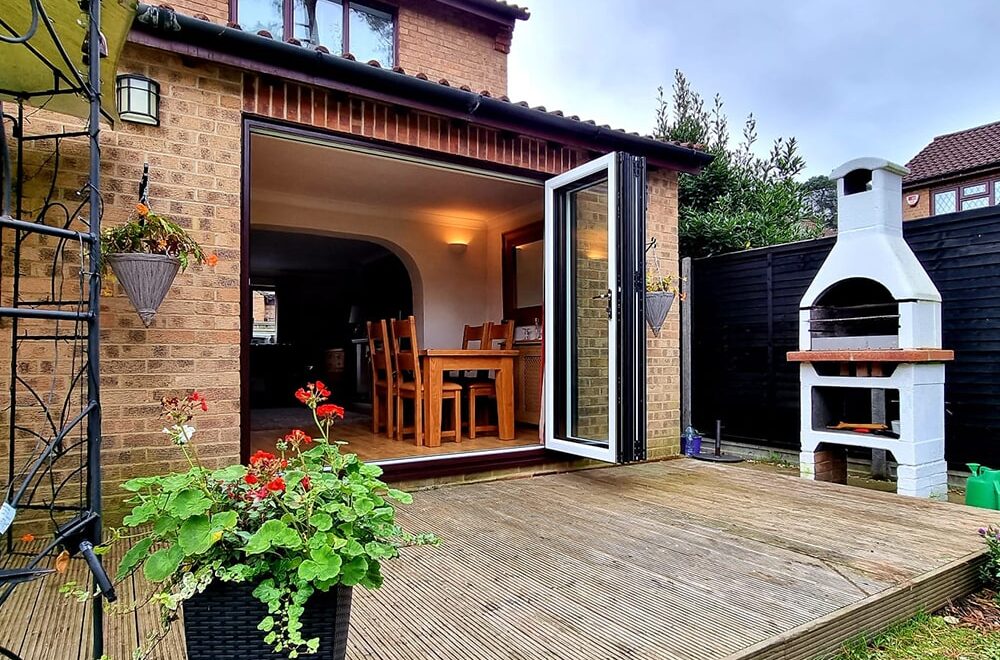


Bi-Folding Doors, Blog, Doors, French Doors, Patio Doors

Bi-Folding vs. Sliding Doors – The Pros And Cons

When considering bi-folding doors vs. sliding patio doors, the first thing to say is that each type of door is hugely popular. Bi-folding or sliding doors are also a great addition if you’re building a conservatory or extension in a bid to let more natural light into your home.

People often ask us about the differences between the two, so in this blog, we’re comparing them both to help you make an informed decision for your own home.

Why are bi-fold and sliding doors so popular?

It’s not hard to see why both sliding and bi-folding doors are so sought after, since both offer excellent ways of merging the inside and outside worlds of your home and garden, flooding your space with natural daylight and framing the view of your garden or other scenic outside area.

They are also great options if you’re replacing a window with patio doors and have sizeable wall space on either side or if you want to replace two smaller windows to create a single bigger opening.

Sometimes bi-fold or sliding doors are also used to replace French doors.

Excellent extensions

If you’re planning an extension for your property, you’ll probably design a space with more room for wider doors than you previously had. This makes sliding patio doors or bi-folding doors the ideal choice for opening up this space and creating a better transition into the garden and your outdoor seating or dining area.

What are bi-folding doors?

Bi-fold doors are constructed from a series of folding panels which concertina up against the wall, opening up all the available space in a way that standard single-leaf doors don’t. Typically, these models are built from either uPVC or aluminium.

What are sliding doors?

Sliding patio doors are usually made up of two large sliding panels, one fixed while the other slides open. In some instances, where there are particularly large openings, there is the option to have a single or double fixed panel in the middle, with a sliding panel either side.

Just like their bi-folding counterparts, sliding patio doors are also made from either uPVC or aluminium.

Comparing bifold and sliding patio doors

At R&M, people often ask us about the main differences between bifold and sliding patio doors. While these models share some similarities, each type also has distinguishing features, and these will help you decide which is more suitable for what you need for your property.

#1 Aesthetics – which looks better?

In truth, both of these kinds of doors can look very stylish and suit a broad range of homes. That includes period or more traditional-looking dwellings.

Bi-folding doors will display a greater frame area since they’re made up of a greater number of smaller panels than their sliding counterparts. So if you want to maximise your view of the outside world by minimising the frame area whilst the doors are closed, then sliding doors are probably the better choice.

#2 Opening space

Both types of doors offer a considerable amount of space on opening, but here bi-fold doors may just pip sliding ones at the post, since they open fully, look superb and when opened up, seriously help break the barriers down between the inside and outside worlds.

With sliding patio doors, there is a single fixed panel, so that they usually open up halfway or possibly slightly more, but never 100%.

#3 Which type is more user-friendly?

Ease of use of doors may well be another consideration for your household. Sliding patio doors are actually easier to operate since you just slide them open and closed.

For their part, with bi-fold models, you need to go through a few more steps to open and close them. When it comes to locking them, all of the locking points of each panel (sometimes as many as seven or more panels) must be engaged. This means that, when comparing bi-fold and sliding patio doors, bear in mind that bi-folding models take slightly longer to open and close, lock and unlock.

#4 Affordability

When it comes to the affordability aspect of bi-folding doors vs. sliding patio doors, you’ll find that bi-folding doors are the more expensive option. That’s because bi-folding doors require a large frame area and more locking mechanisms (for each panel). Sliding patio doors require less framing and locking mechanisms as it tends to be just one opening part.

#5 Maintenance

The good news is that both sliding patio doors and bi-fold doors are pretty low-maintenance. Since both are made from weather-resistant uPVC or aluminium, neither requires much upkeep beyond a quick, regular wipe-down with a damp cloth. However, if forced to choose, we’d probably say sliding doors need slightly less TLC, given that they tend to have fewer frames, locks and panels to worry about.

#6 Soundproofing

Both bi-folding and sliding patio doors come with double glazing as standard. However, there are options for triple-glazing and even acoustic glazing if you really want to reduce noise pollution. Acoustic glass is particularly beneficial if you live in a built-up area, under a flight path or have noisy neighbours.

#7 Security

The good news when comparing bi-folding doors with sliding patio doors is that both provide a high degree of security thanks to their locking systems, secure glazing and strong frames.

Energy efficiency

Our Aluminium bi-folding doors are the only ones on the market today that meet the new building regulations for thermal efficiency. Our sliding patio doors are also A-Rated! So whichever you choose, you can be sure you’re getting the best energy rating on the market!

Looking for new patio doors?

At Bracknell-based R&M Windows, we supply a broad range of replacement doors and windows across our local area, including in Ascot, Wokingham, Maidenhead and Windsor. We sell and install both sliding patio and bi-folding doors, alongside a number of other home improvements, from front doors to conservatories and orangeries.

We won’t give you the hard sell. Get in touch today for an informal, no-obligation consultation.